RESIDENTIAL
WINDOW TINTING
ORANGE COUNTY
We come to your house.
It is four o'clock in the afternoon. The sun has dropped low enough to come straight through the back slider. The living room is warmer than the rest of the house, there is a white glare across the TV, and one arm of the couch has faded a shade lighter than the other. Solar control window film fixes most of that, and A5 Automotive Films does mobile residential window tinting Orange County homeowners can book without leaving the house. We bring the film, the tools, and the water to you.
What to expect on install day
Our owner has been tinting windows since before A5 opened in 2020, and that experience is in cars. Homes came later. The film, the glass, and the heat all behave the same way, but we are not going to tell you we have been doing houses for twenty years. What we will tell you is what film can and cannot do for your house, in plain words, before you spend a dollar.
With mobile residential window tinting Orange County homeowners skip the shop, because there is no shop to drive to and no glass to take anywhere.
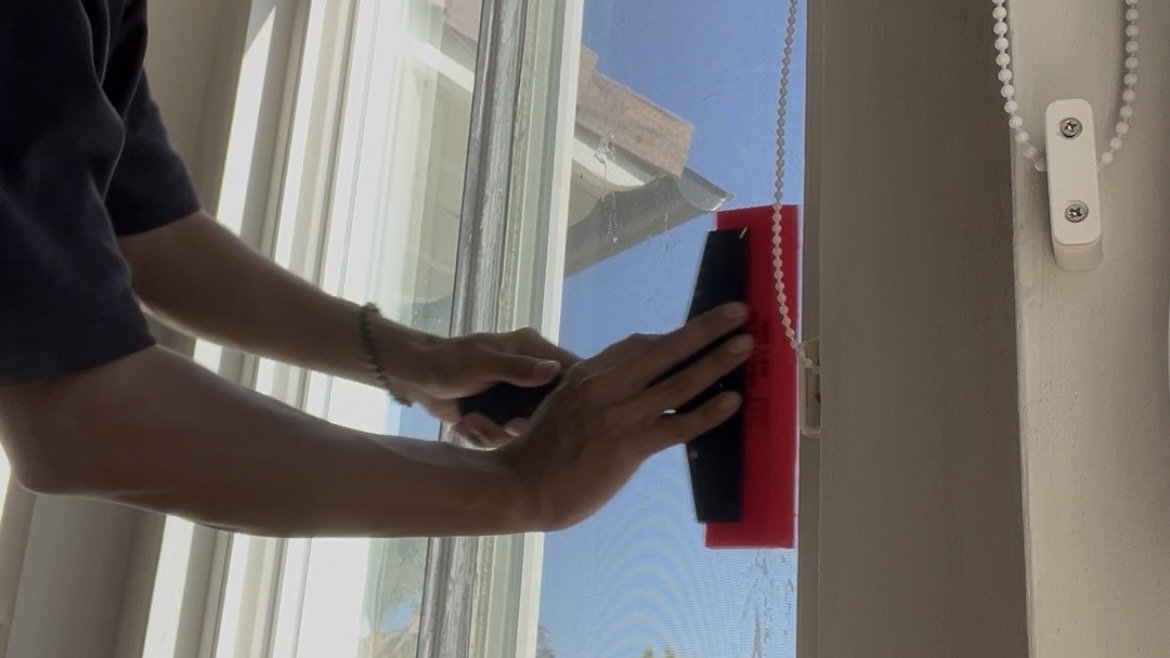
We show up with the film, the squeegees, the slip solution, and drop cloths. We need a parking spot, and a clear path to the windows. We handle the rest.
Most homes take 2-4 hours. We give you a real time estimate when we see your glass, because a house with six big sliders is a different day than a house with four bedroom windows.
Free Onsite Estimates
Estimates are free and we do them at your house. We do not quote homes over the phone, and there is a reason for that.
Film choice depends on what kind of glass you already have. Dual-pane, single-pane, low-e coating, tempered, annealed, clear, tinted from the factory, a hot west wall versus a shaded north wall. All of it changes which film is safe and which film is a waste of money. Ten minutes at your window tells us more than an hour on the phone.
While we are there we walk the house with you and tell you which windows actually need film. Sometimes that is two windows, not twelve.
Residential Window Tinting
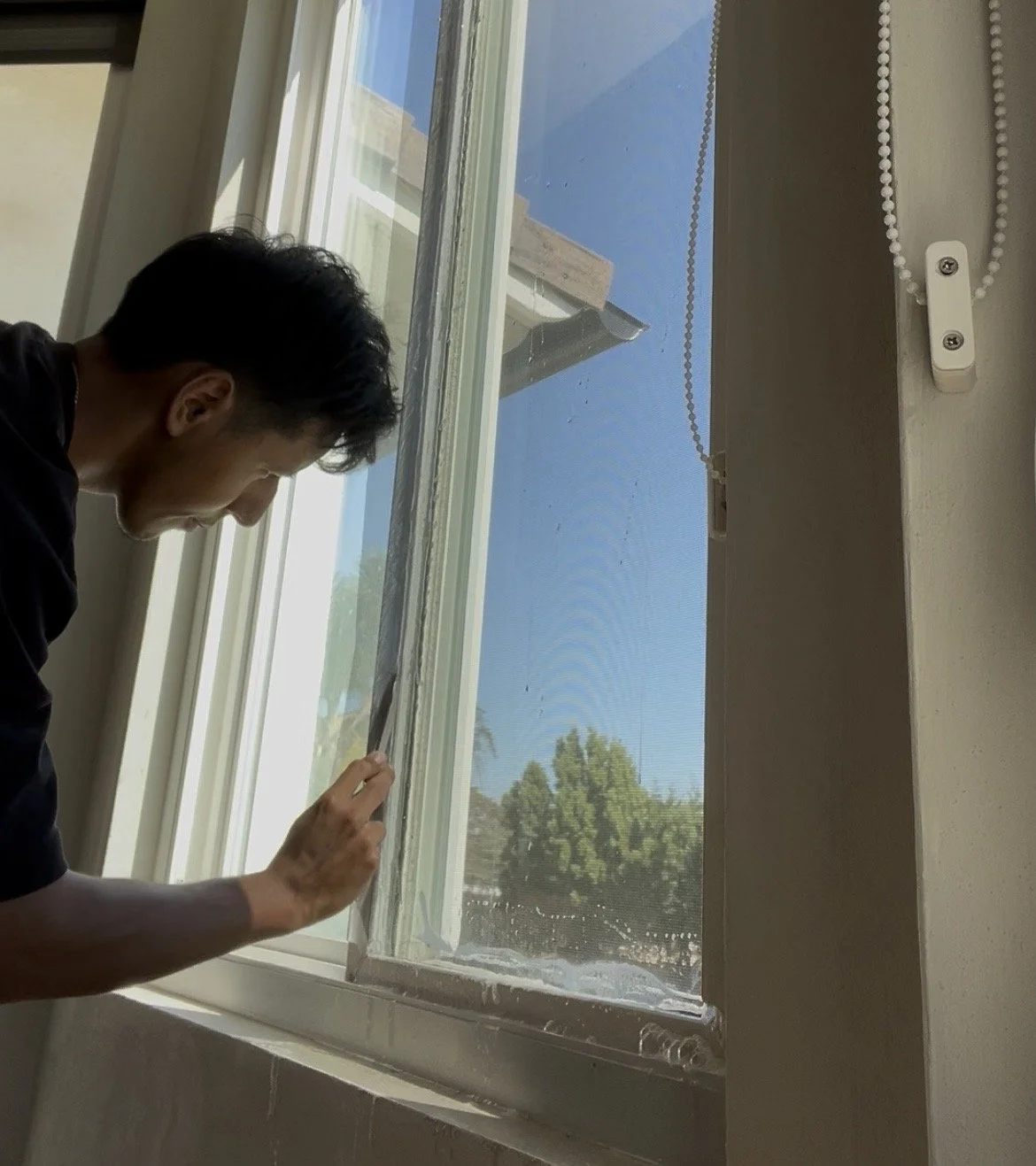
Residential window tinting is film applied to the inside of your home's glass. It is thin, it is clear or lightly shaded, and it goes on the interior side, so weather never touches it.
The film does three jobs at once. It cuts heat coming through the glass, it cuts glare, and it blocks UV rays that fade floors and furniture. Most people call us for one of those three and are happy about the other two.
Where Orange County Homes Need It Most
- West-facing windows. Anything facing the afternoon sun takes the worst of it. This is the number one call we get.
- Big sliding glass doors. Newer homes in Irvine, Mission Viejo, and Ladera Ranch are built with walls of glass. Great view, hot room.
- Skylights. A skylight points straight up at the sun all day. Small piece of glass, big heat.
- Coastal glare. In Newport Beach, Huntington Beach, and Laguna, the water throws light back at the house. It is bright without being hot, and film handles it.
- Santa Ana weeks. When the winds turn and the heat sits on the county for four days, the rooms with the most glass are the rooms nobody sits in.
Solar Control Window Film
Solar control window film is the everyday choice for heat rejection and glare reduction. It is what goes on most of the homes we do.
Modern solar film does not have to be dark. Some films stay close to clear and still cut heat, and darker films cut more. Darker is not automatically better. The right film is the lightest one that solves your problem, because you still want to see out.
Film also does not fix everything. If your air conditioner is undersized, or your attic has no insulation, film helps the sunny rooms and does nothing for the rest. We will say so.
UV Protection and Fade Reduction
UV protection is the part people care about after they lose a rug. Madico states that its films block 99% of UV rays.
Fading has three causes: UV light, visible light, and heat. Film handles the UV and helps with the other two, but no film stops fading completely. Anyone who tells you their film means your floors will never fade again is selling, not explaining. If you have a piece of art or a rug you truly cannot replace, film plus a shade beats film alone.
Privacy Window Film
Privacy window film keeps people from seeing into your home during the day. Front-facing living rooms, ground-floor bedrooms near a sidewalk, bathroom windows, and homes on a corner lot are the usual spots.
One thing to understand before you buy it. Reflective privacy film works when the outside is brighter than the inside, which means daytime. At night, with your lights on, the effect flips and people can see in. If you want night privacy, you want frosted or decorative film, or you want blinds. We would rather tell you that now than after the install.
Decorative Window Film
Decorative window film is the frosted, etched, and patterned film you see on bathroom glass, office doors, pantry doors, and entry sidelights. It gives you light and privacy at the same time, in both directions, day and night.
It is not a heat film. People sometimes expect a frosted bathroom window to cool the room down, and it will not do much. Different tool, different job.
Sliding Glass Door and Skylight Tinting
Sliding glass doors and skylights are the two hardest pieces of glass in most Orange County homes, and they are usually the two that need film the most.
Sliders are large, they are often tempered, and they face the yard, which in this county usually means west or south. Skylights sit above your head at an angle, so we work off a ladder and the panel has to go on clean the first time. Both are doable at your house. Both take longer than a bedroom window, and we price them that way.
HOA Rules and Window Film
Most HOAs in Orange County allow window film, and many of them have a rule about how it looks from the street. The usual rule is no mirrored or highly reflective film, because the association wants the building to look the same from outside.
Check your CC&Rs before you book, or ask your board. It is a short email and it saves a headache. If your HOA will not allow a reflective film, that is not the end of it. Non-reflective films cut plenty of heat, and that is what we would put on your house anyway in most cases.
When Window Film Is Not the Right Fix
Film is a good product and it is not a cure for everything. Times we tell people to hold off:
- Your windows are already failing. If you see fog or haze between the two panes, the seal is broken. Film will not clear that up. You need the glass replaced.
- The glass is cracked or chipped. Fix the glass first. We are not going to put film over a crack.
- Your problem is air, not sun. If you feel a draft, or the room is cold in winter and hot in summer, that is usually leaky windows or insulation. Film works on sunlight, not airflow.
- You want blackout privacy at night. Use decorative film or window coverings instead.
- You are replacing the windows next year. Wait. Put the money into the new glass and film it after.
- One small north-facing window. Honestly, it is not worth the trip or your money.
Madico Film and the Warranty
We install Madico film. Here is what that means and what it does not.
Most Madico residential installs carry a lifetime limited warranty for as long as the original owner owns the home. It is non-transferable, and it applies to film installed on interior glass. It covers film defects: peeling, bubbling, cracking, and adhesive failure. It covers professionally installed film only.
Madico films also carry limited glass breakage coverage against thermal stress for up to 5 years, capped at $500 per window. Thermal stress is glass cracking from uneven heating, which is the real question behind “can film break my window.” On dual-pane windows, seal failure coverage is shorter and depends on the window maker's own warranty, not ours.
Terms are different for different film lines. Decorative films usually carry about 7 years, and exterior films 5 years. We are not going to call any film “lifetime” until we have confirmed the line of film.
Madico states that its films block 99% of UV rays. We do not publish heat numbers, energy savings numbers, or fade-prevention percentages beyond what Madico publishes, because the real number depends on your glass. Anyone quoting you a flat percentage over the phone is guessing.
One care rule: do not clean the windows for 30 days after install. The film needs that time to cure. You may see a light haze or small pockets of water in the first couple of weeks. That is normal and it dries out on its own.
Questions Homeowners
Actually Ask
Get a Free Estimate
If your west-facing rooms are too hot, your TV has a glare on it, or your floors are fading, we will come look at it and tell you straight whether mobile residential window tinting Orange County wide is worth it for your house.
Orange County Cities We Cover
We do mobile residential window tinting Orange County wide and surrounding areas. We are based in Fountain Valley, near Mile Square Park, and we stay inside these counties. That keeps our drive short and our schedule honest.
Huntington Beach, Costa Mesa, Newport Beach, Irvine, Cypress, Anaheim, Orange, Placentia, Mission Viejo, Laguna Niguel, Aliso Viejo, and San Clemente.
Neighborhoods we get called into often: Turtle Rock, Woodbridge, Northwood, and the Great Park side of Irvine, Huntington Harbour, the streets off Pacific Coast Highway, the hillside homes above Laguna Canyon, and the newer tracts around Mission Viejo and Ladera.
Looking for car window tinting instead? We do that too: